Best IPTV providers in Australia 2026: tested and ranked
If you’re asking what is the best IPTV provider in Australia in 2026, you’re not alone, and the answer isn’t straightforward. Australians have never had more ways to watch television: free-to-air apps, subscription video on demand, pay-TV bundles, sports-only platforms. Yet most households still end up paying for three or four services just to cover everything they actually watch. That fragmentation has a real cost, and choosing the wrong IPTV subscription makes it worse. You either overpay for content you don’t use, or you end up shortchanged when the cricket finals roll around.
This article ranks the leading options for Australian households in 2026 across five practical criteria: channel depth, live sports coverage, price, 4K streaming quality, and device support. One service stands out as the clearest all-in-one solution for Aussie households wanting to consolidate their viewing without paying Foxtel prices. We’ll get to that shortly.
What actually makes a good IPTV service in 2026
Before comparing providers, it’s worth agreeing on what actually matters. Marketing claims about channel counts are easy to make and hard to verify. Here’s what actually matters when comparing providers.
Channel count and content depth
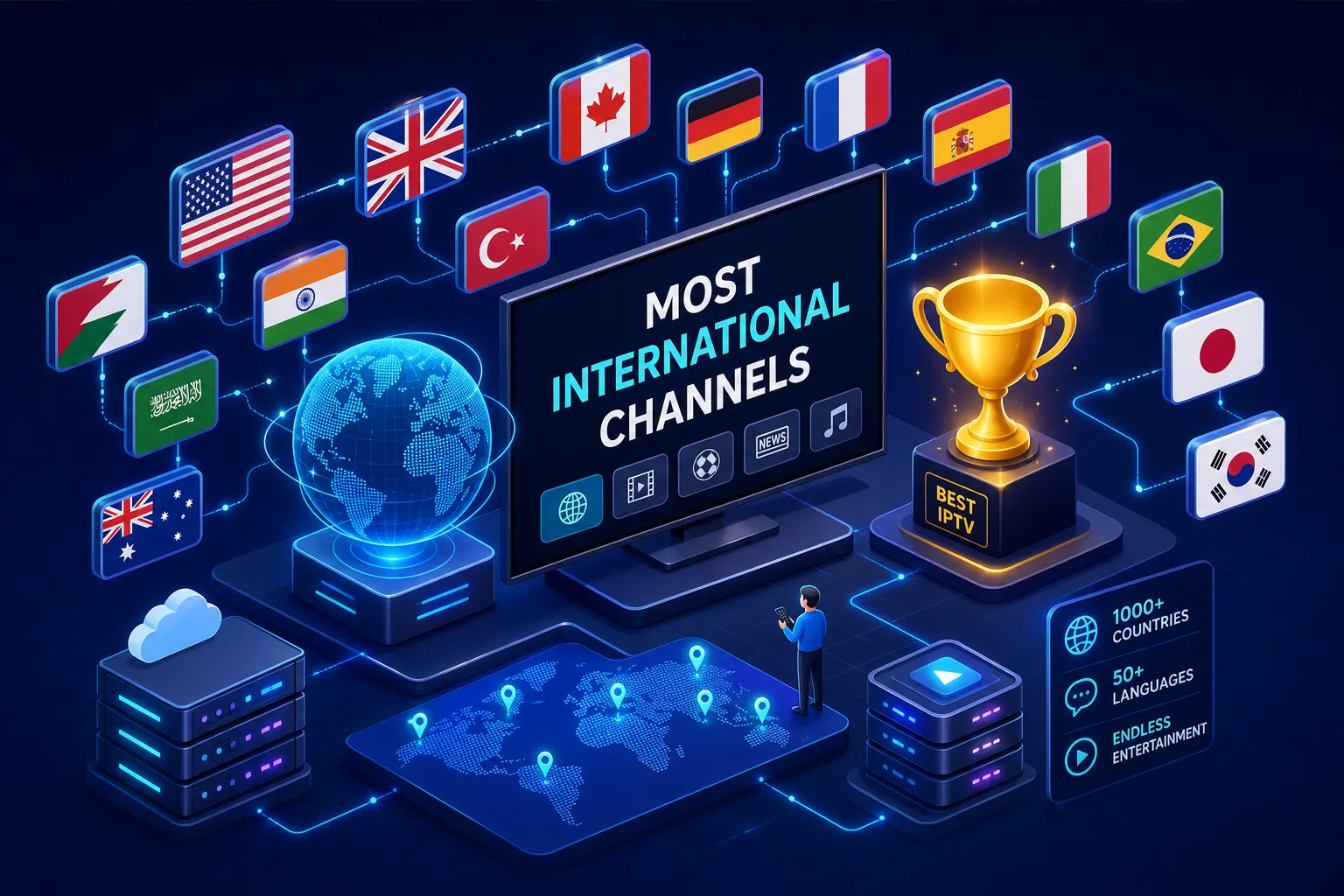
Raw numbers tell you something, but not everything. A service advertising 65,000+ live channels delivers real value only if those channels are live, well-categorised, and available in HD or 4K rather than a mix of SD feeds that drop out at inconvenient times. When evaluating any IPTV service, consider how many live channels it carries, how large the VOD library is, and how many of those channels are dedicated sports feeds rather than general entertainment, all three questions matter, and a weak answer to any one of them should give you pause.
Streaming quality and buffer-free performance
4K streaming is increasingly expected by many viewers in 2026, but whether you actually get it depends on two factors: the provider’s infrastructure and your NBN connection speed. In practice, you’ll need at least 25 Mbps for a single 4K stream, and 50 Mbps is the more practical target for households using multiple devices or streaming during peak evening hours. Providers that use stream optimisation technology deliver noticeably fewer dropouts on congested NBN connections, particularly on FTTN or HFC connections that struggle with peak-hour latency. For context on how ISPs compare, see reporting on Australia’s most reliable NBN providers.
Price, flexibility and risk-reversal options
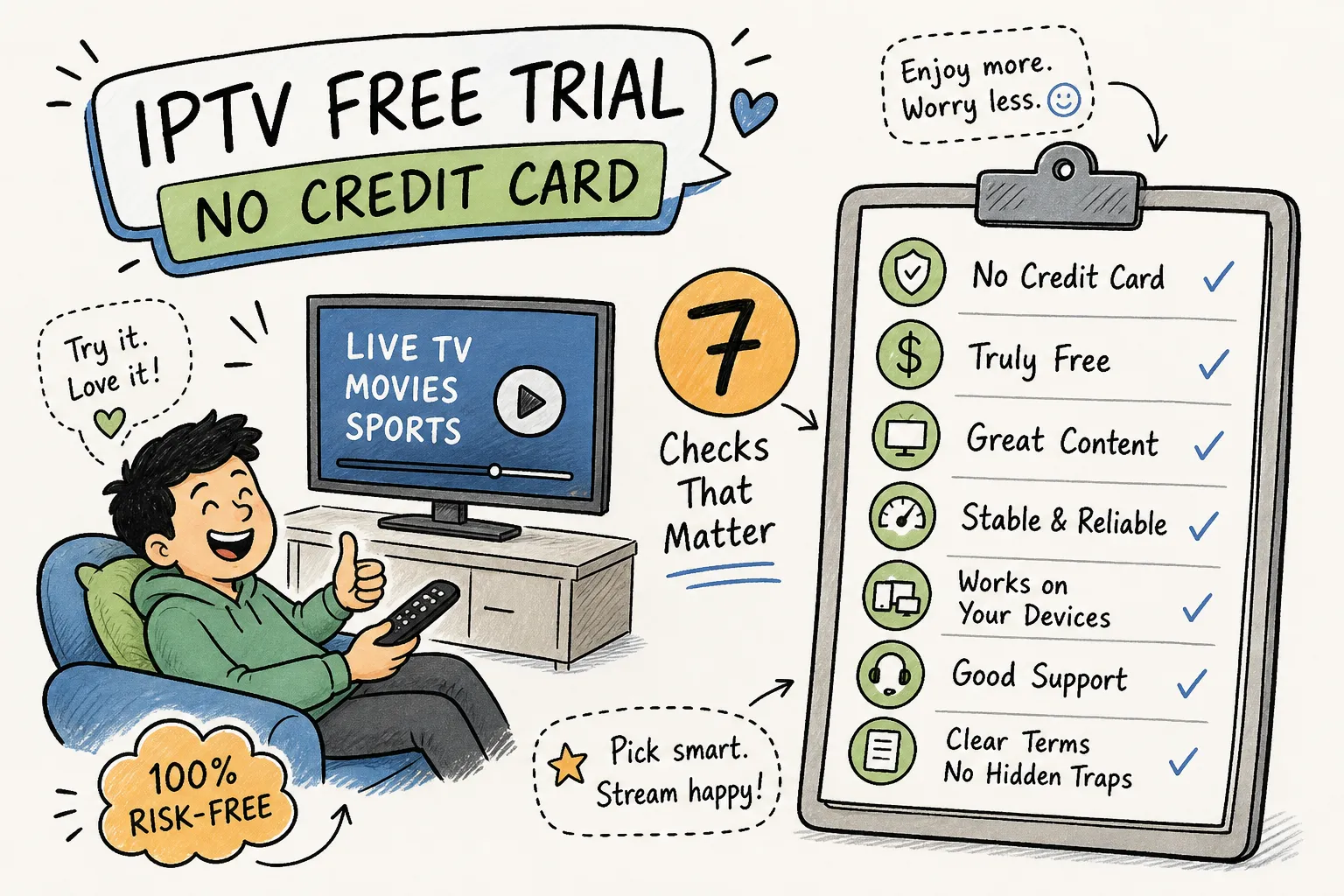
Month-to-month plans, free trials, and money-back guarantees are not optional extras. They’re the difference between a provider you can test properly and one you’re locked into after a single session. Before signing up to any IPTV subscription, confirm whether a free trial is available, whether there’s a refund window after you pay, and whether the plan is month-to-month or tied to a fixed-term contract.
What is the best IPTV provider in Australia in 2026? Our ranked list
IPTV Australia 4K: the standout pick for Australian households
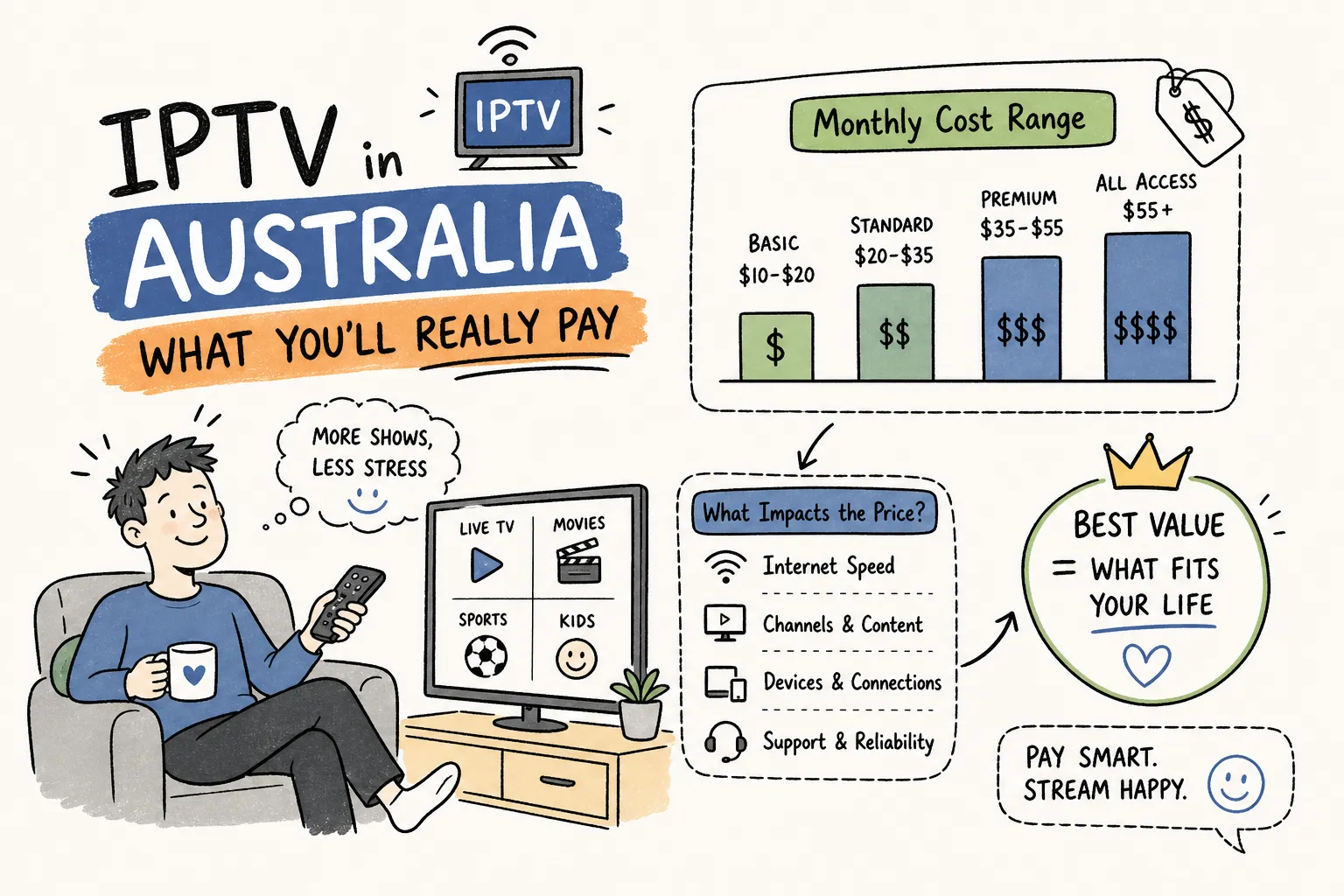
IPTV Australia 4K is among the most comprehensive IPTV subscriptions available to Australian households in 2026. According to the provider, the service delivers 65,000+ live channels, 100,000+ on-demand movies and series, and 23,000+ dedicated sports channels across SD, HD, Full HD, and 4K quality, figures readers should verify directly with the provider before subscribing. AFL and cricket coverage is a claimed strength. Provider-listed pricing starts at $15 AUD per month for a single device, with annual options bringing the cost down to $72 AUD per year; confirm current terms on the provider’s website before committing. Instant activation, 24/7 WhatsApp support, and a 7-day money-back guarantee on all paid plans are also advertised as part of the package.
The free trial option is worth using before you pay anything. Test live sports streams and peak-hour performance during that window, an AFL match on a Friday night or a Test session on a weekday evening will tell you far more about real-world reliability than any marketing page. That combination of a pre-purchase trial and a post-purchase refund window is a stronger safety net than most competing services offer. Verify the current trial and refund terms directly with the provider, as these can change.
Other services worth knowing about
Several other IPTV providers serve the Australian market, including Tivi-Live, Voco TV, and Flash 4K IPTV. Most advertise 24-hour free trials without requiring a credit card, with pricing typically sitting in the $8 to $15 per month range, though readers should confirm current pricing with each provider. That said, transparent channel lineups are rare among these providers, uptime data is largely self-reported, and refund policies are either absent or limited. Voco TV is one exception, advertising a 30-day money-back guarantee, which is worth noting. For broader reading on available options, see a roundup of best IPTV services in Australia. For most households, however, the combination of content breadth, support quality, and risk-reversal terms at IPTV Australia 4K makes it the stronger choice among unlicensed providers, keeping in mind the legal considerations outlined below.
Licensed pay-TV alternatives: Foxtel, Kayo and Fetch TV
Kayo Sports, the Foxtel app, and Fetch TV are fully licensed pay-TV options for viewers who prioritise legal certainty above all else. Kayo’s Standard plan sits at $29.99 per month in 2026, with the Premium plan (which adds 4K and a second screen) at $45.99. The Foxtel app carries higher monthly costs; note that Foxtel Now was discontinued in 2023, so check the current Foxtel app subscription tiers and pricing directly with Foxtel for up-to-date 2026 figures. Fetch TV channel packs range from roughly $14.99 to $34.99 per month on most plans, with HD quality standard across the range. Channel counts across these licensed services sit broadly in the 35 to 50+ range, a significant gap compared to the depth claimed by IPTV Australia 4K. For households wanting comprehensive live entertainment alongside sports, these services leave clear gaps that a broader IPTV subscription is designed to fill.
Sports coverage compared: AFL, cricket and live events
Why live sport is the real test for any IPTV service
Buffering during a finals match is genuinely unforgivable. Live sports demand consistent, low-latency streams, and that requirement separates well-resourced IPTV providers from services that handle standard entertainment well but fall over under peak-load conditions. AFL game days and Test match sessions are exactly the scenarios where infrastructure quality becomes visible. A sports fan’s loyalty to any streaming service is won or lost at those moments.
IPTV Australia 4K’s sports library: AFL, cricket, NRL and beyond
IPTV Australia 4K advertises 23,000+ dedicated sports channels covering AFL (every round, finals series, and the Grand Final), cricket in all formats including Tests, Big Bash, ODIs, and international tours, as well as NRL and A-League. Global coverage extends to Premier League, NBA, NFL, Formula 1, and UFC. These are provider-claimed figures; confirm channel availability for your preferred competitions directly before subscribing, as content lineups can vary. The breadth on offer is what separates this service from options that carry a handful of Fox Sports feeds and little else. According to the provider, this sports content is available in HD and 4K rather than being downgraded to standard definition for Australian audiences.
How Kayo and Foxtel compare on Aussie sport
Kayo Sports offers solid AFL and cricket coverage in 4K at its Premium tier. Its interface is built around sport rather than bolted onto a general entertainment shell, which suits dedicated sports viewers. The limitation is exactly that sports-only focus: there’s no general entertainment, no international channels, and no VOD library worth mentioning. Foxtel covers AFL and cricket via Fox Footy and Fox Cricket, but its monthly cost is the highest in the market and 4K is not available across all plans. For households wanting sports alongside general entertainment, neither service matches the value density available at IPTV Australia 4K’s price point, provided the provider’s claimed content and quality hold up under testing.
Pricing, plans and what you actually get for your money
Subscription tiers: monthly vs. annual plans
IPTV Australia 4K’s pricing is structured for flexibility, according to the provider’s advertised terms. A single-device monthly plan starts at $15 AUD, with 3-month and 6-month options sitting between that and the annual plan at $72 AUD per year. Two-device plans are available for households with multiple viewers. Set that against Kayo’s $29.99 to $45.99 per month range, and the difference in cost per channel accessed becomes stark. The annual plan makes the most sense for households who’ve confirmed the service works for their setup via the free trial.
Free trials and money-back guarantees: what to look for
Most unlicensed IPTV providers offer 24-hour free trials with no credit card required. That’s useful for a basic check but far too short to verify performance across a full sports broadcast, test peak-hour streaming, or properly evaluate channel depth. IPTV Australia 4K advertises a full free trial before you pay, plus a 7-day money-back guarantee on all paid plans, verify current terms directly with the provider. That window is enough to test an AFL match, a live cricket session, and general entertainment viewing across your devices before making any commitment. Voco TV’s 30-day guarantee is the one competitor exception worth noting, though its content library is considerably smaller.
Device support and getting set up on NBN
Supported devices: Smart TV, Firestick, Android TV and more
IPTV Australia 4K is compatible with Android TV boxes (including Xiaomi Mi Box and Nvidia Shield), Amazon Fire TV Stick, Sony and other Smart TVs running Android or Google TV, MAG boxes, iOS and Android smartphones, and Windows and Mac computers. One important caveat: Samsung Smart TVs running Tizen and LG Smart TVs running webOS are not natively compatible with Android TV apps. If you own one of these models, an external Android TV stick or box connected via HDMI is the straightforward workaround. Setup on any compatible device involves downloading an IPTV player app such as TiviMate or IPTV Smarters, entering your provider credentials, and loading your channel playlist. On a Fire TV Stick, the Downloader app handles the install, since these players are side-loaded rather than available directly from the Amazon App Store.
NBN speed requirements for stable 4K IPTV streaming
A 25 Mbps connection is the technical minimum for a single 4K IPTV stream, but 50 Mbps is the practical target for reliable performance during peak evening hours when NBN congestion is most likely. FTTP connections deliver the lowest latency and fewest dropouts, making them the best match for 4K IPTV. FTTN and HFC connections can work well but are more susceptible to peak-hour degradation. Run a speed test before subscribing, and run it at 8 pm on a weekday, not at noon on a Sunday, to get an accurate picture of what your connection actually delivers under real conditions. For practical guidance on recommended speeds, see this primer on internet speed for streaming.
Quick pre-signup checklist
- Confirm your NBN speed supports your target quality tier (25 Mbps minimum for 4K, 50 Mbps recommended).
- Check device compatibility with your existing TV or streaming setup.
- Use the free trial to test live sports channels and peak-hour performance before paying.
- Confirm the provider’s current refund policy before committing to an annual plan.
Legal considerations and how to stream safely in Australia
Understanding Australia’s IPTV legal landscape
The IPTV technology itself is lawful in Australia, but streaming copyrighted content without authorisation from rights holders is not, it constitutes unlicensed distribution under the Copyright Act 1968. Rights holders in Australia have used Federal Court injunctions under section 115A to block access to foreign infringing services, and enforcement actions against commercial resellers have resulted in significant fines and, in some cases, custodial sentences. For more detailed discussion of the legal framework, see the ALRC report on copyright and the digital economy. High-profile enforcement and blocking actions have also been covered in media reporting, such as a streaming piracy blocking case in Australia that illustrates how courts have moved to limit access to infringing services. This means not all IPTV subscriptions carry identical legal exposure, but readers should understand the landscape clearly before subscribing. Kayo Sports, the Foxtel app, and Fetch TV sit entirely outside this concern as fully licensed services.
If you do choose an unlicensed provider, understand that the legal risk sits with the distribution of unlicensed content, not the technology itself. Confirm with any provider whether the content they distribute is properly licensed before subscribing.
How to trial a service before committing any money
The most practical approach is to use a free trial to verify channel availability, test sports stream performance, and confirm your device setup works properly before paying anything. Contact the provider’s support channel directly to confirm the current trial terms and refund policy before you start. IPTV Australia 4K’s advertised 7-day money-back guarantee gives you considerably more time to run a proper evaluation across a range of content types than a 24-hour window that barely covers a single broadcast day, but confirm these terms are current before relying on them.
Which IPTV service is right for your household in 2026?
The right choice depends on what you actually watch. If your household is primarily AFL and cricket with some general entertainment, you need a service with genuine sports depth and reliable peak-hour performance. If you’re a multicultural household wanting international channels alongside Australian content, channel breadth matters more than a sports-only platform can offer. And if price is the deciding factor, the gap between a $15/month IPTV plan and a $45/month sports-only subscription is difficult to ignore.
So, if you want to know what is the best IPTV provider in Australia in 2026, our testing and research point to IPTV Australia 4K as the strongest all-in-one option for most households, based on the provider’s advertised content depth, sports coverage, 4K quality, and price point. For a broader comparison and deeper reading, see our Best IPTV Australia 2026, The Ultimate Guide. The channel counts, sports feeds, and VOD library put it in a different category from services offering a few dozen licensed channels at premium prices. The free trial removes the financial risk from trying it, and the 7-day money-back guarantee means you’re not locked in if it doesn’t suit your setup. Verify current terms directly with the provider before subscribing.
Start with the free trial, run it through a live AFL or cricket session during peak hours, and let the performance speak for itself. If it holds up through a live final and a weeknight peak hour, it’ll hold up for you.
Related articles :