Reliable IPTV service in Australia: what to look for
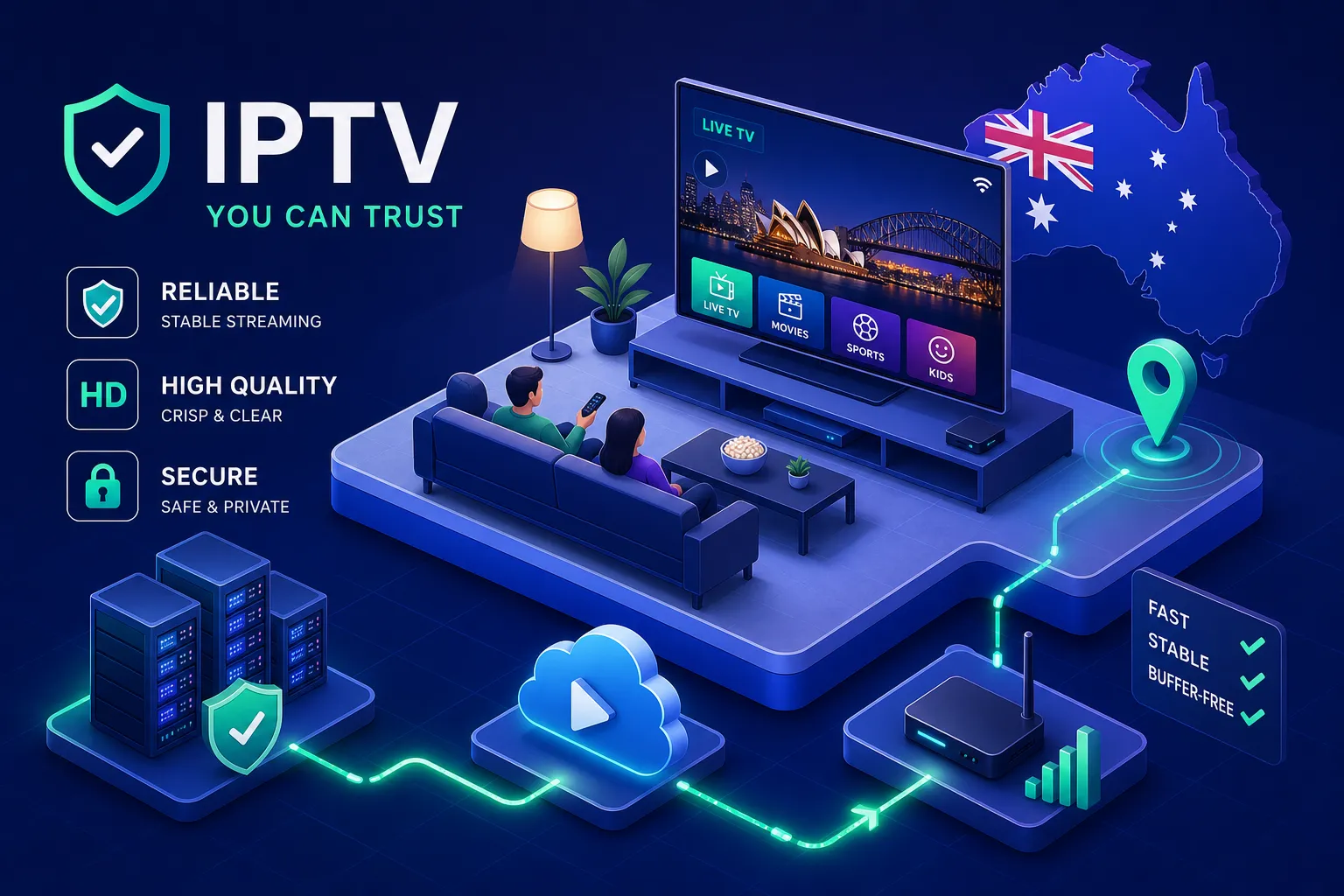
Most Australians pick an IPTV service by scanning the channel count. They see “65,000 channels” and figure that must mean quality. Then Friday night rolls around, the AFL grand final is on, and the stream drops at the start of the third quarter. Channel count has nothing to do with reliability. It never did. If you’re searching for a reliable IPTV service in Australia, the number on the sales page is the last thing you should be looking at.
What actually separates a service worth paying for from one that frustrates you every peak hour is a set of factors that don’t appear on a sales page: server infrastructure, stream stability under NBN congestion, responsive support, and genuine risk protection. This guide covers all of it. By the end, you’ll know exactly what to test, what to ask, and what red flags to walk away from. Services like IPTV Australia 4K have set a useful benchmark in this market, and we’ll reference it throughout. But the framework here applies to any provider you’re evaluating.
What most people get wrong when choosing an IPTV service
The biggest marketing number in the IPTV space is channel count. Providers compete on 20,000 versus 65,000 channels as if the difference determines quality. It doesn’t. A service with 200 stable, well-encoded channels beats one with 65,000 that buffers on a standard NBN connection. The number is a deliberate distraction.
The question that actually matters isn’t “how many channels?” It’s: “How does this service perform on my NBN connection at 8 pm on a Saturday during the football?” That’s the real test. From that question, five reliability pillars follow: uptime and server infrastructure, stream stability and 4K optimisation, NBN compatibility during peak hours, customer support responsiveness, and risk protection through trials and refund policies. Everything else is noise.
Finding a reliable IPTV service in Australia: why NBN compatibility comes first
The minimum you need for stable IPTV streaming varies by resolution. For 4K, research consistently points to a minimum of 25 Mbps with 50 Mbps recommended; standard definition and Full HD require less, though exact figures depend on encoding and bitrate. Most Australian households on NBN 50 or NBN 100 plans have enough headroom for quality streaming, but available bandwidth isn’t the whole story. Peak-hour congestion on FTTN and HFC infrastructure can dramatically reduce your effective speed between 7 pm and 10 pm, regardless of your plan tier. That’s why IPTV for NBN connections lives and dies on your provider’s ability to handle that congestion, not just your plan speed.
Server location shapes the experience more than most people expect. Providers with servers physically located in Australia, or using CDN nodes in Sydney, Melbourne, or nearby hubs like Singapore and Auckland, deliver meaningfully lower latency and fewer dropped frames during live sport. An offshore server based in Europe can look fine in a speed test at midday and still buffer through an entire first quarter when congestion hits at 8 pm on game night. The undersea cable distance alone introduces latency that no subscription price can fix. When evaluating any subscription you’re considering, ask directly where the servers are located. If the answer is vague, treat that as your answer.
Stream stability and 4K optimisation: what they actually mean
Uptime figures are everywhere in this market. “99.9% uptime” appears on review sites and comparison pages across the board. Here’s the problem: no independent third-party body audits IPTV uptime in Australia. The figures come from the providers themselves or from affiliate review sites. That doesn’t automatically make the claims false, but it means you can’t rely on a spec sheet to verify them. User forums, Reddit communities, and your own trial period are the most practical sources of real performance data you’ll find.
Stream optimisation is the provider’s ability to dynamically adjust bitrate, reduce packet loss, and maintain picture quality when your network conditions fluctuate. Without it, a 4K stream becomes unwatchable the moment NBN congestion hits. IPTV Australia 4K states that stream optimisation is built directly into its delivery infrastructure, and the claim is worth testing with a trial during peak hours. Many budget services lack this capability entirely, and the buffering during live sport is the predictable result. When you’re testing a provider, this is what you’re actually measuring, even if you don’t call it by that name.
Customer support as a reliability signal
Live sports don’t buffer conveniently during business hours. If a stream drops during the third quarter and there’s no support available, the service has failed regardless of its uptime percentage. The benchmark for genuine reliability is 24/7 human-accessible support, not a ticket form with a 48-hour response window. IPTV Australia 4K offers direct support via WhatsApp, which the provider describes as around-the-clock access for resolving issues quickly. That kind of accessibility is a feature, not an afterthought.
Before you subscribe to any service, test the support channel first. Send a genuine question before you pay and note how quickly and clearly it gets answered. A provider that’s slow or evasive during the sales phase will be worse when something breaks. Vague responses, bot-style replies, or long delays before a sale signal the same problems you’ll face after you’ve handed over your money. Responsive support isn’t separate from reliability. It’s part of it.
Trial periods, money-back guarantees, and reducing your risk
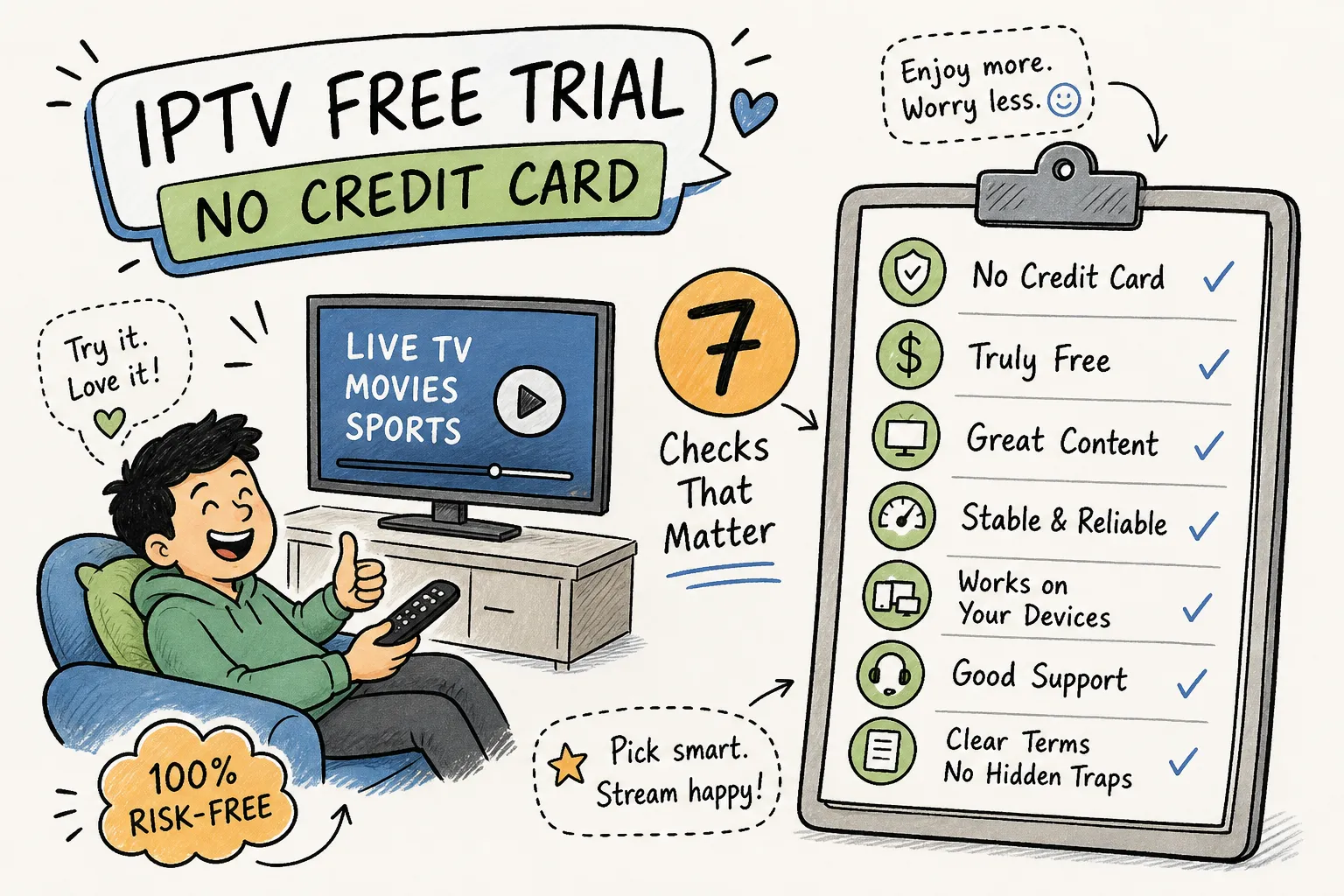
A legitimate IPTV trial isn’t a free sample. It’s a diagnostic window. During any IPTV trial Australia-based users get access to, test the service at different times of day with particular attention to peak hours between 6 pm and 10 pm. Test on the devices you actually use, and on the specific channels and sports that matter to you. If it buffers during a trial, it will buffer after you’ve paid. A provider that offers a free trial is making a confidence statement about their own product.
IPTV Australia 4K advertises a 7-day money-back guarantee. Read the refund terms carefully before you subscribe, and check that the conditions are clearly stated. As a general rule, providers that don’t offer any refund window are worth approaching with scepticism. Treat the refund policy as a reliability indicator, not just a financial safety net. It tells you what the provider actually believes about their own uptime when real Australian users are testing it at real peak-hour conditions.
During the trial, run these specific checks. Watch a live sport broadcast between 7:30 pm and 10 pm on a weeknight. Time how long channels take to switch: anything consistently over three seconds signals performance problems. Confirm that channels marketed as HD or 4K actually deliver that resolution rather than downgrading silently. Send a support message and measure the response time. These aren’t complicated tests, but they reveal everything the marketing copy won’t.
Device setup, legal awareness, and your final checklist
Setup on any modern device is straightforward. Android TV boxes and the Amazon Firestick are the most common choices, followed by Samsung and LG Smart TVs and MAG boxes. Most providers, including IPTV Australia 4K, use standard apps: IPTV Smarters Pro or TiviMate, installed through the device’s app store or via the Downloader app on Fire TV. You’ll receive Xtream Codes credentials on signup, a username, password, and server URL. Enter those into the app and channels load within a few minutes. No technician, no special hardware, no complicated configuration. A stable internet connection and the correct app is all you need.
The legal picture in Australia deserves a straight answer. IPTV technology itself is legal. The legality of any specific service depends on whether the provider holds broadcast rights for the content it streams. Unlicensed services operate in a grey area under the Copyright Act 1968, and the 2026 amendments have increased civil penalties significantly, with individual infringement potentially reaching $150,000 per breach. The practical red flags for unlicensed providers are consistent: no Australian Business Number, no verifiable physical address, no licensing references in the terms of service, and prices that are implausibly low for the volume of content on offer. Services that tick those boxes also tend to shut down without warning and without refunds. The risk isn’t just legal. It’s financial and operational.
The bottom line on finding a reliable IPTV service in Australia
Reliability isn’t a feature. It’s the entire product. An IPTV service that buffers during the AFL grand final, goes dark on a Sunday evening, or has no one to call when something breaks isn’t saving you money. It’s costing you the experience you paid for, and replacing the frustration of an expensive Foxtel contract with a cheaper version of the same problem.
The framework is simple: check where the servers are, test during peak hours, verify the support is real and responsive, use the trial window properly, and read the terms before you commit. Providers that invest in stream optimisation, offer genuine around-the-clock support, and back their service with a money-back guarantee are the ones that have confidence in what they’ve built. IPTV Australia 4K covers all of those bases, and backs it with a free trial, a 7-day money-back guarantee, and 24/7 WhatsApp support. Confirm the specific terms on their site before subscribing.
Wherever you land, the checklist doesn’t change. Finding a reliable IPTV service in Australia means finding one that earns your trust before it earns your money. In any IPTV comparison Australia 2026 puts in front of you, start with a trial, test it hard during peak hours, and let the service prove itself before you commit to anything longer than a month.
Frequently asked questions
What makes an IPTV service reliable in Australia?
The key factors are server location (local or regional CDN nodes), the provider’s ability to handle NBN peak-hour congestion, stream optimisation technology, and accessible customer support. Channel count is not a reliability indicator.
How do I test an IPTV service before committing?
Use the free trial period to watch live sport between 7:30 pm and 10 pm on a weeknight. Check channel switching speed, confirm advertised resolutions are delivered, and contact support to measure response times. Any buffering during the trial is a reliable predictor of post-purchase performance.
Is IPTV legal in Australia?
IPTV as a technology is legal. Individual services are legal if the provider holds appropriate broadcast rights. Unlicensed services carry civil and financial risk under the Copyright Act 1968. Look for an ABN, a verifiable address, and licensing references in the terms of service.
What internet speed do I need for IPTV in Australia?
For 4K streaming, research points to a minimum of 25 Mbps with 50 Mbps recommended. Standard definition and Full HD require less bandwidth, though exact figures vary by encoding method. NBN 50 or above is sufficient for most households, provided congestion is managed at the provider end.
Related articles: