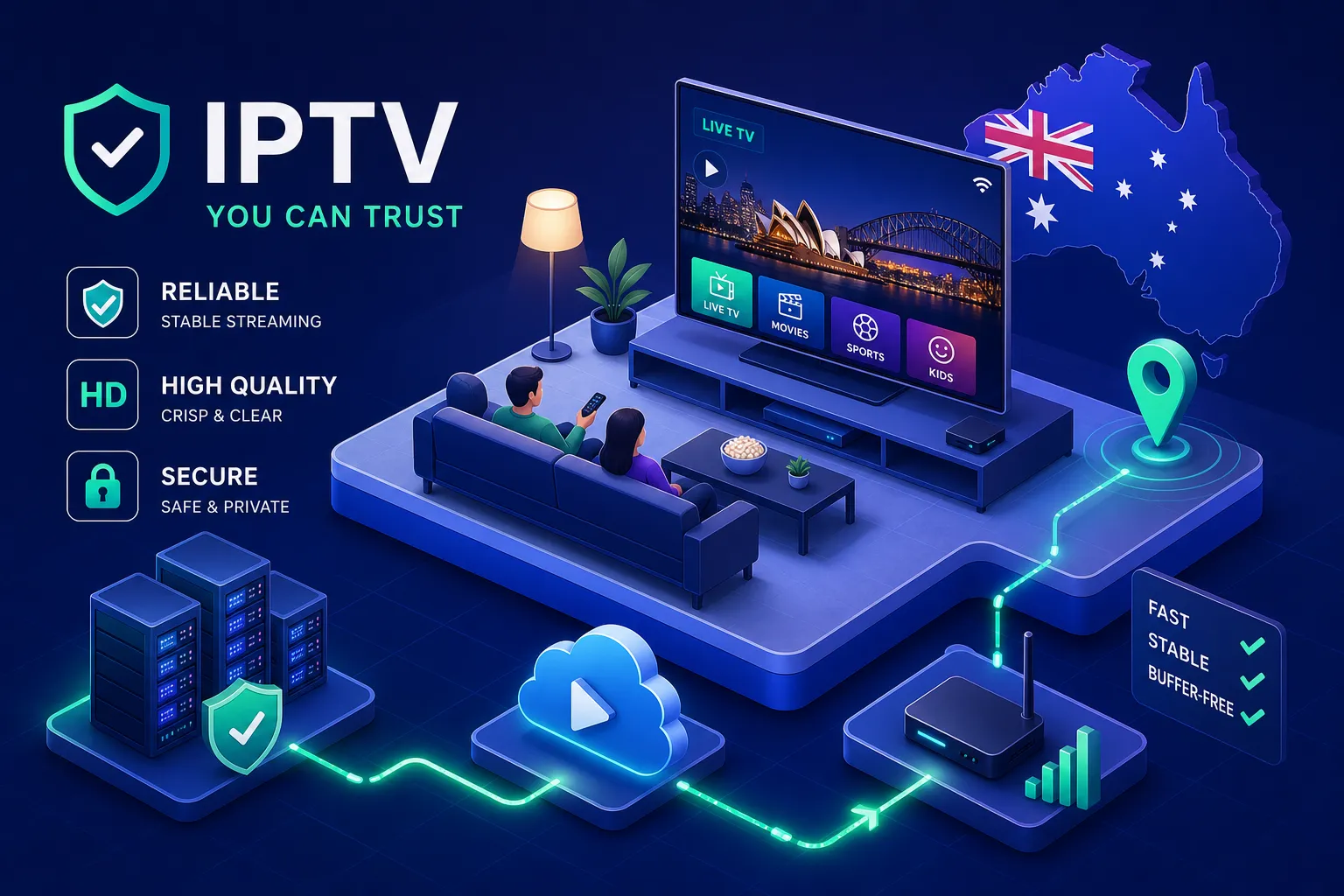
Kayo Sports vs IPTV: What Aussie Sports Fans Must Know
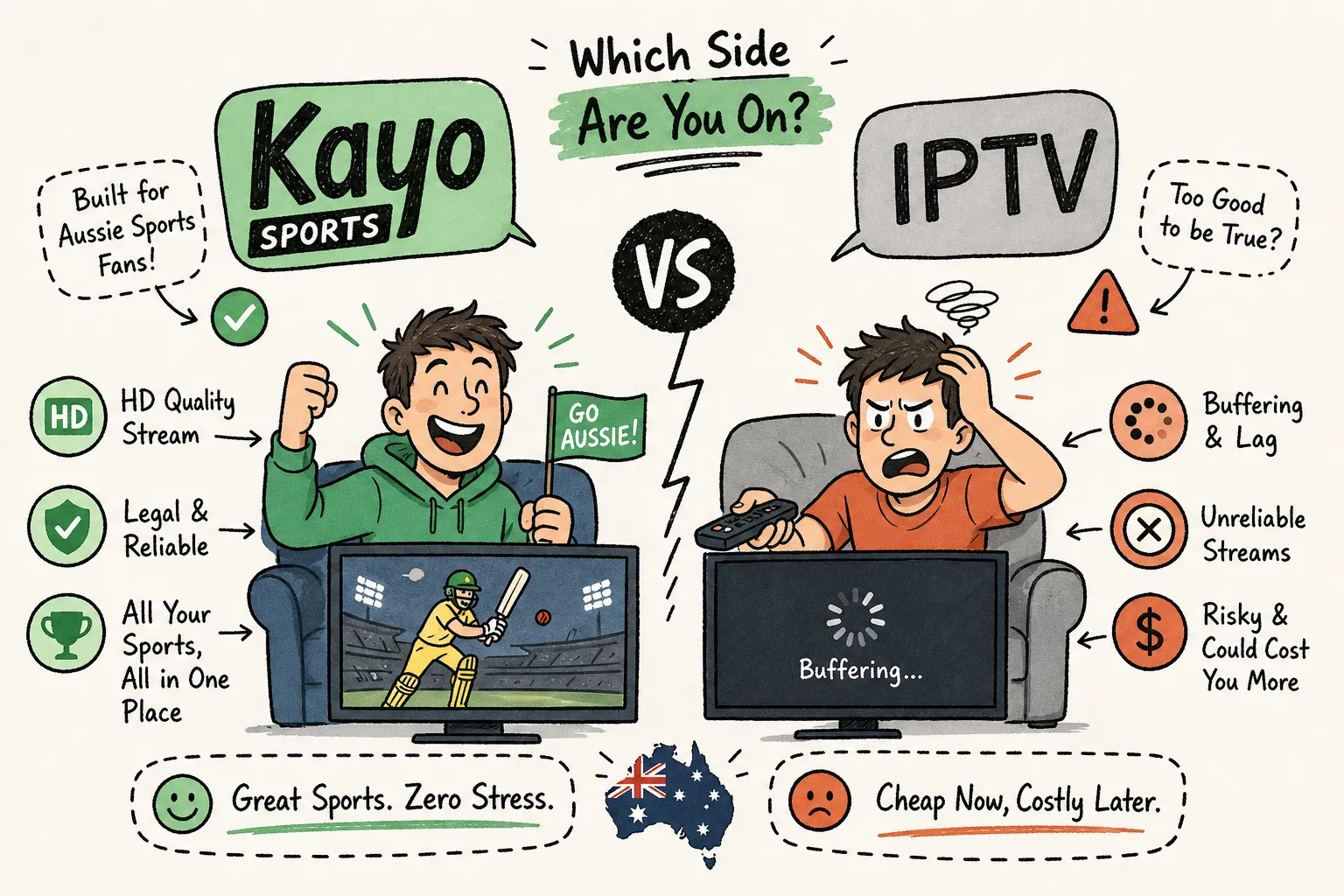
Kayo Sports vs IPTV is a comparison that more Aussie households are making in 2026, and for good reason. Kayo Premium hit $45.99 a month in February 2026. That is a real price for a real product that still buffers during the Grand Final. The frustration driving this comparison is legitimate, and it deserves a straight answer rather than a lecture about piracy.
The Kayo Sports versus IPTV question is more nuanced than a simple licensed-versus-unlicensed binary. Plenty of IPTV services run solid infrastructure with genuine uptime commitments. Kayo, meanwhile, has its own reliability issues during live events. There is a spectrum on both sides, and where you land depends on what you actually watch, what you’re willing to pay, and what risk profile sits comfortably with you.
This article gives you the honest breakdown across cost, content, legality, streaming quality and device support. By the end, you’ll have a clear enough picture to make a decision that fits your household rather than someone else’s.
What Kayo Sports actually costs and covers in 2026
Kayo currently offers two plans. Standard is $29.99 per month for one screen at HD quality. Premium is $45.99 per month for two screens with 4K available on selected events. The Premium plan increased by over $5 in February 2026, while Standard dropped by a single cent from $30. Make of that what you will.
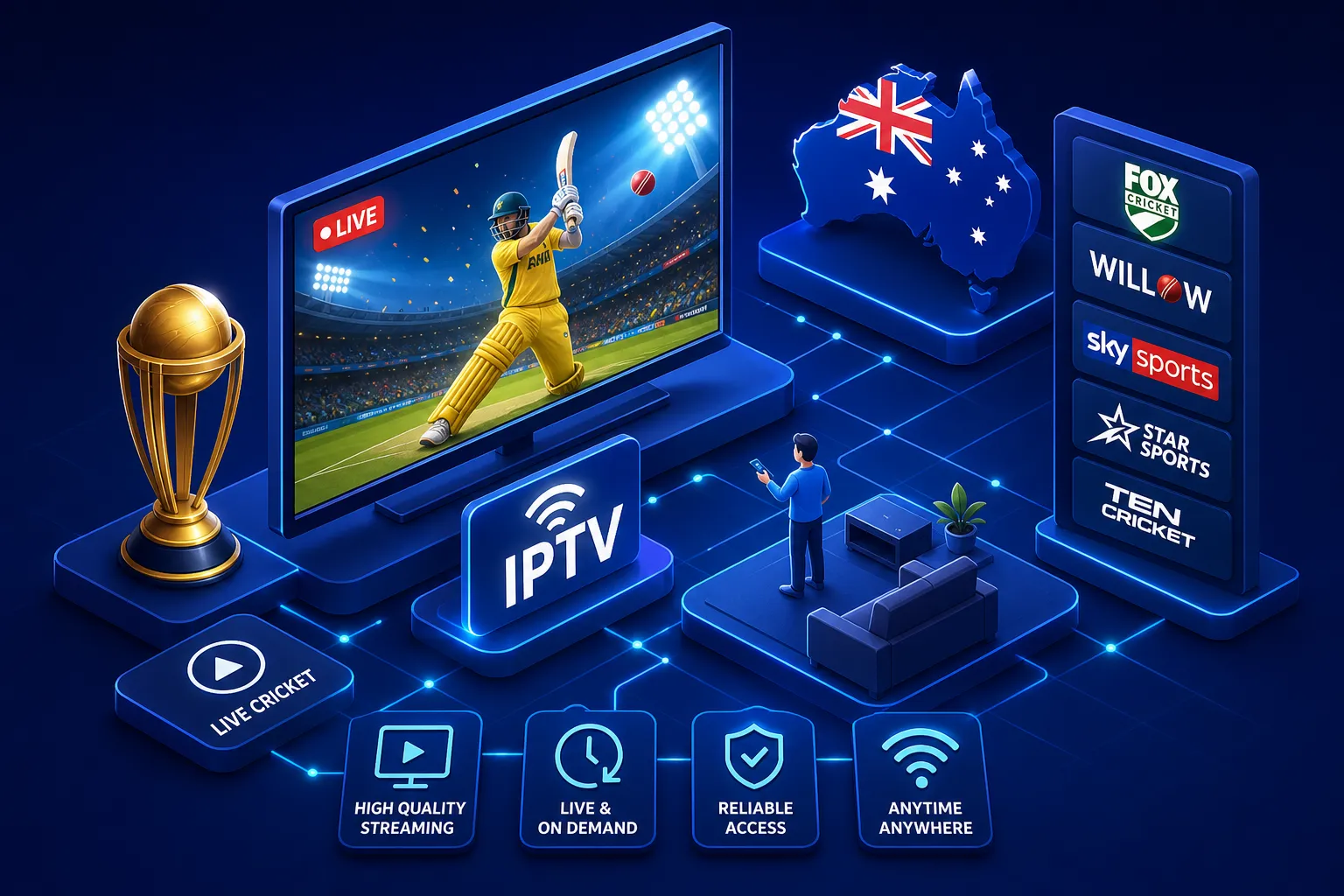
The 4K requirement on Premium is worth understanding: you need a 25 Mbps connection and a compatible device, and 4K is only available for AFL, NRL, Formula 1, cricket and netball. It is not a whole-of-platform upgrade. Kayo’s sports rights portfolio is genuinely hard to match on a like-for-like basis. Every AFL and NRL game is live and ad-break free. Cricket coverage includes the Ashes and Australia versus India. Formula 1 gets full practice, qualifying and race coverage in 4K. Golf exclusives cover The Open and the DP World Tour. NBA and NFL come via ESPN. These are real broadcast rights with broadcast-grade production behind them.
Where Kayo falls short is outside sport. There is no on-demand entertainment library, no international channels and nothing for a household member who does not care about the footy. At $45.99 a month, you are paying a premium price for a single category of content. For a solo sports fan, that may be fine. For a family, the value calculation gets uncomfortable quickly.
Kayo Sports vs IPTV, cost, channels and sports access
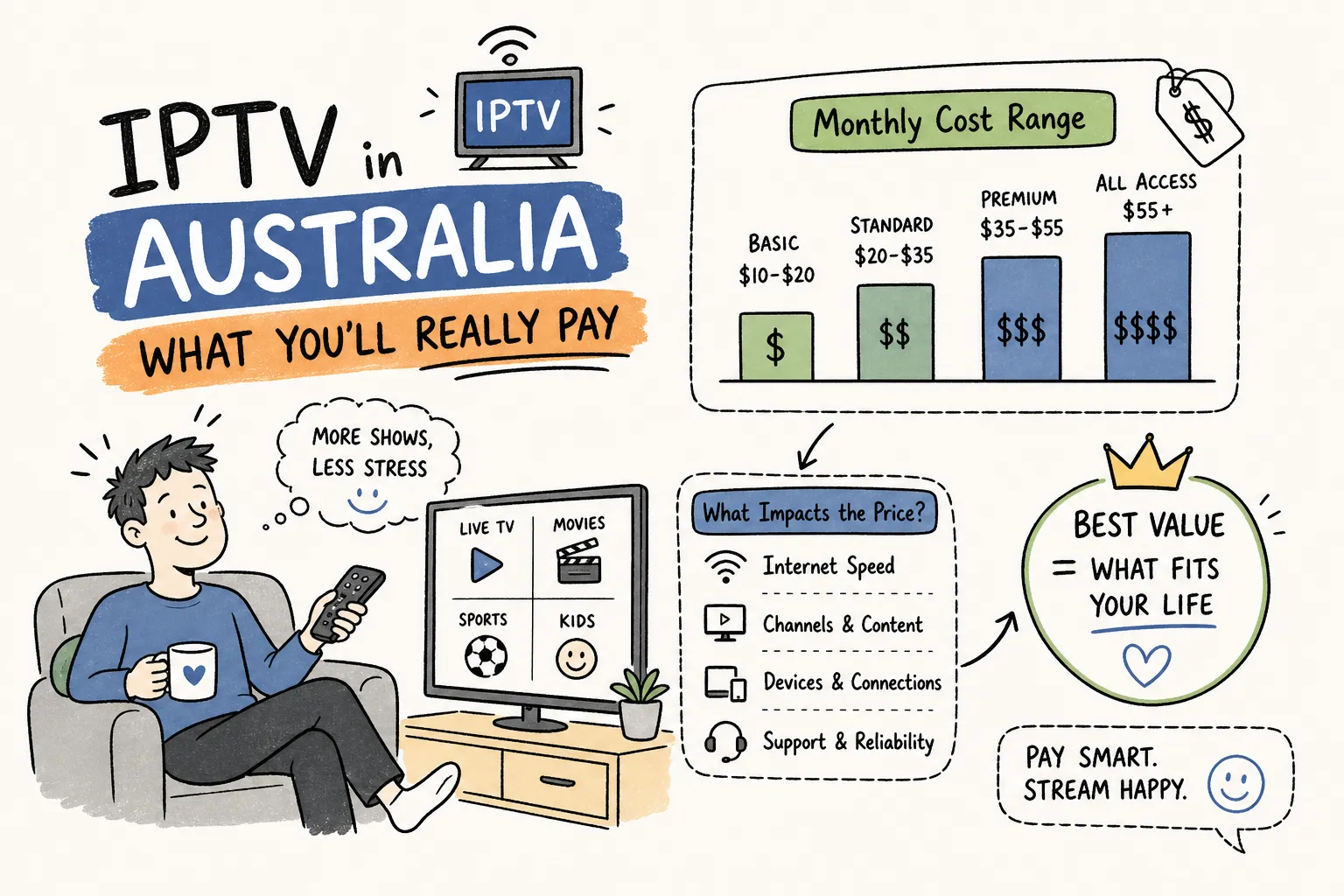
The price gap between Kayo and a typical IPTV service is substantial. Most reputable IPTV providers advertised to Australian customers sit in the $15 to $18 per month range for monthly plans. Annual plans push the effective monthly cost down to somewhere between $6 and $10. Against Kayo Premium at $45.99, that is a meaningful difference over twelve months. For a practical rundown of reputable suppliers and what to look for when choosing an IPTV supplier, see the Best IPTV Provider in Australia 2026.
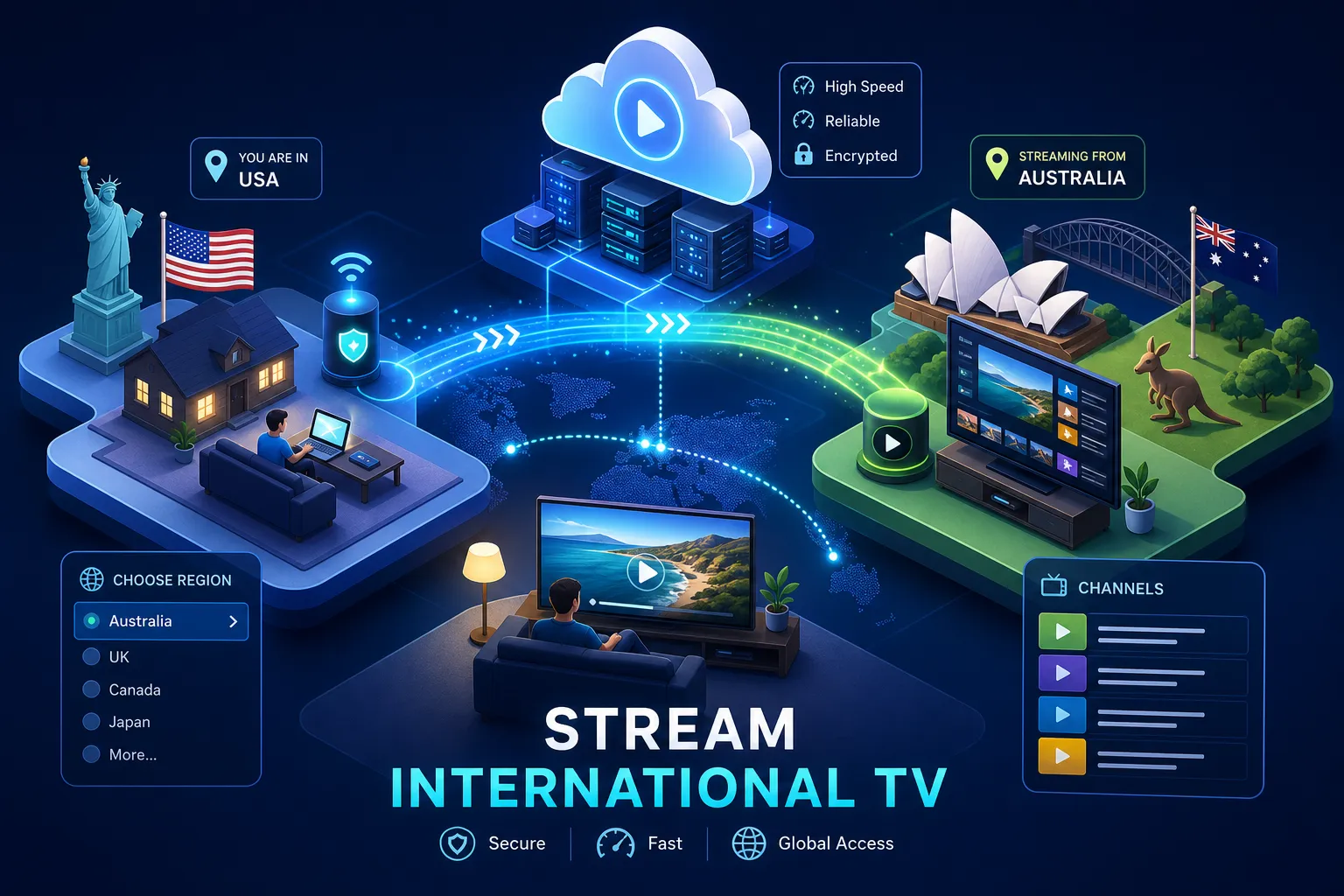
On paper, the channel volumes are extraordinary. Providers advertise anywhere from 15,000 to 65,000 or more live channels, including AFL, NRL, cricket, Premier League, Champions League, NBA, NFL, UFC and F1. These figures typically include regional duplicates and international variants of the same feed, so treat advertised channel counts as a rough guide rather than a precise inventory. On-demand libraries can run to 100,000 or more titles across sport, drama, film and international content. This breadth is the core appeal: one subscription covering sport, entertainment and international content instead of stacking multiple services.
The important distinction here is between channel volume and rights security. IPTV services aggregate content from international broadcasters rather than holding Australian broadcast licences themselves. The coverage exists, but the source is not the official local broadcaster. That distinction matters for legality, which gets its own section below, but it also matters for reliability. Not all IPTV providers deliver what they advertise. Some are stable operations with solid infrastructure. Others go dark without warning and without a refund. The provider you choose determines the experience you get, which makes due diligence essential.
The legal and security reality of IPTV in Australia
What the law actually says
IPTV technology is entirely legal. The legality question is about the service, not the delivery method. Under the Copyright Act 1968, streaming copyrighted content through an unlicensed provider constitutes copyright infringement. The Broadcasting Services Act does not require IPTV suppliers to hold a broadcasting licence, but copyright compliance remains mandatory regardless. The device on your shelf and the app on your screen are not the problem. The source of the stream is.
The penalties on paper are significant. Civil liability for individuals can reach $117,000 per infringement under the current Copyright Act 1968. Some legal commentary has flagged the possibility of further legislative amendments raising that ceiling, though any such changes would need to be confirmed through official government sources before relying on specific figures. Criminal prosecution carries up to five years imprisonment for commercial-scale distribution. In practice, Australian enforcement focuses almost entirely on operators and resellers, not home viewers. Individual prosecutions for personal use are rare. Understanding where the actual enforcement risk sits gives you a more realistic picture than the headline penalty figures suggest.
Practical risks beyond the legal question
The practical consequences that matter more day to day are often not legal at all. Sudden service shutdowns with no refund, malware exposure from unverified app instals, credit card data risks from providers operating without legitimate payment infrastructure, and ISP warning letters are all real outcomes associated with low-quality operators. The difference between a reckless choice and a calculated one is the provider you select. Choosing a provider that offers a money-back guarantee, accepts legitimate payment methods and has a verifiable track record eliminates most of these risks, without resolving the copyright question entirely.
Streaming quality: Kayo Sports vs IPTV
Kayo’s buffering reputation is well documented by its own user base. Posts across Reddit’s r/australia and r/AFL communities describe quality drops and crashes during live streams on connections running at 500 Mbps or faster, particularly during high-demand match times. Replays rarely buffer. Live streams do. For a product charging $45.99 a month on the explicit promise of 4K live sport, this is a meaningful shortcoming rather than an occasional inconvenience.
IPTV streaming quality varies by provider and server load. Premium IPTV services with dedicated infrastructure can deliver competitive bitrates for specific events, particularly for Formula 1 and international football. Some users in IPTV-focused forums report stronger picture quality on IPTV streams for events where Kayo’s bitrate underdelivers, though results vary significantly by provider. Consistency across all events depends entirely on the provider’s investment in server capacity, which is why the choice of provider matters as much as the technology category itself. Services with stream optimisation built specifically for high-demand events tend to perform markedly better than budget alternatives.
Device compatibility at a glance
On device compatibility, Kayo covers a defined list: Samsung TVs from 2017 onwards, LG TVs from 2018, Amazon Fire TV Stick, Apple TV (4th generation and up), Google TV, PlayStation 4 and 5, and iOS and Android devices. Selected Android TVs running OS 8.0 or higher are supported with caveats around which manufacturers qualify. If you own hardware that Kayo does not officially support, IPTV often works where Kayo cannot. For Kayo’s official device list see What devices can I use to stream Kayo. Many IPTV services also support generic Android boxes and third-party players like TiviMate via M3U.
Where IPTV Australia 4K sits in this conversation
IPTV Australia 4K is a service built specifically around the content priorities of Australian households: sports first, with everything else included. The sports library covers a substantial range of channels spanning AFL, NRL, cricket, A-League, Premier League, Champions League, NBA, NFL, UFC and the 2026 FIFA World Cup. That sits alongside a broad live channel catalogue and an extensive on-demand library of movies and series, including international and multicultural content that neither Kayo nor free-to-air television carries. For a deep dive into sports-focused IPTV offerings, see the Best IPTV Australia 2026 Sports Package.
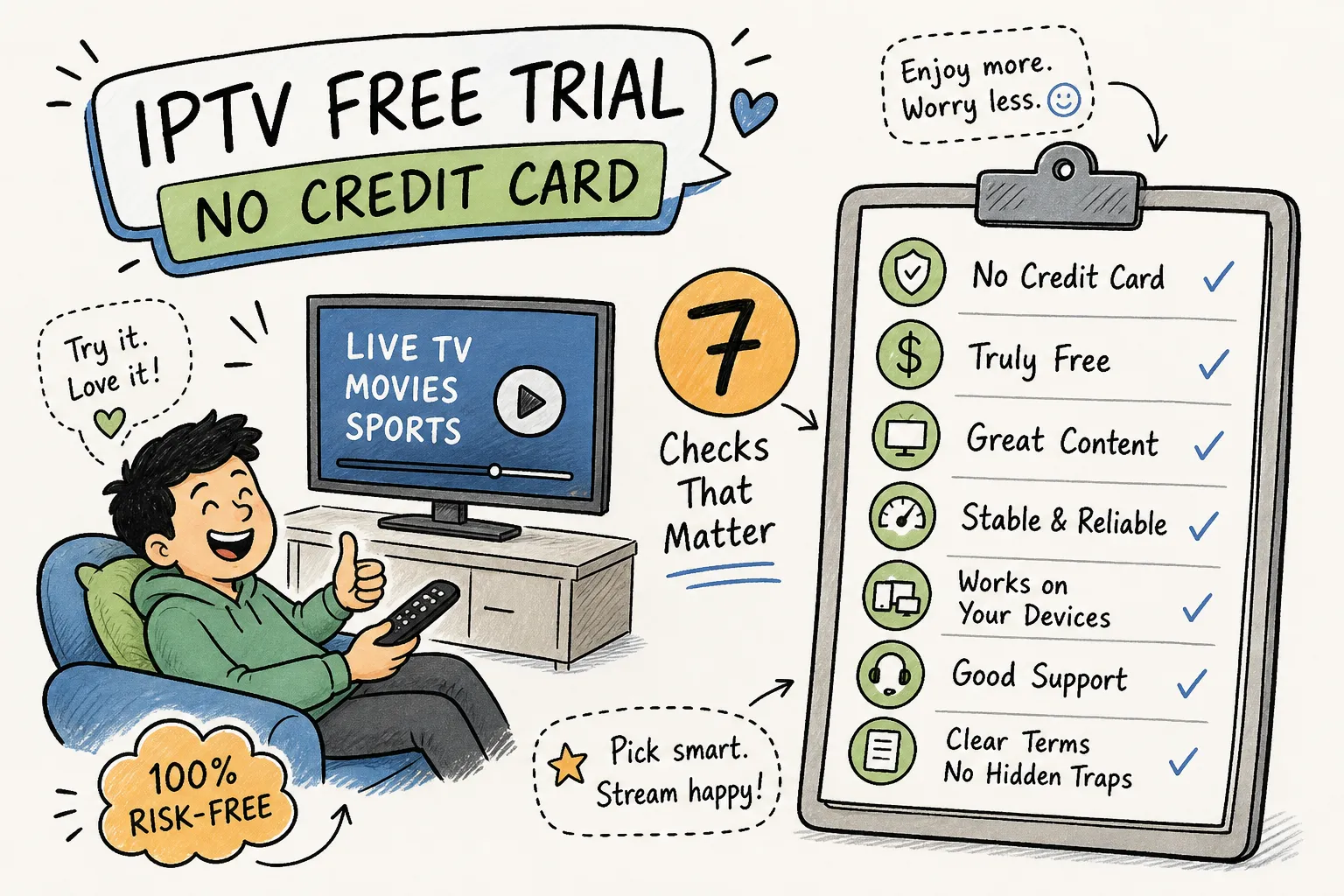
Pricing starts from $15 per month, with flexible monthly, 3-month, 6-month and annual plans available. At the annual rate, the per-month cost is a fraction of what Kayo Premium charges. 4K streaming is included across all plans rather than reserved for a higher tier, and the service supports multiple simultaneous devices depending on the plan you choose. A free trial is available before any payment commitment, and paid plans come with a 7-day money-back guarantee.
It is worth being clear about the trade-offs. IPTV Australia 4K does not hold official Australian broadcast licences for the content it streams, which places it in the same copyright position as other IPTV services operating in this space. If a fully licensed product and guaranteed official broadcast rights are your non-negotiables, no IPTV service, including this one, will satisfy that requirement. What IPTV Australia 4K does offer is a verifiable track record, legitimate payment infrastructure, and a no-risk entry point to assess whether the service suits your household before committing any money. For a broader perspective on Australian IPTV in 2026 see the IPTV Australia 2026 guide.
The service suits cord-cutters who want sport plus entertainment in a single subscription, households tired of paying Kayo rates for one category of content, fans of international sport that Kayo does not carry, and multicultural communities wanting access to home-country channels that Australian free-to-air and pay-TV platforms simply do not offer.
The honest answer to the Kayo Sports vs IPTV comparison
Kayo wins in one specific scenario: you want exclusively Australian domestic sport, you have no interest in international content or on-demand entertainment, and a fully licensed product is worth $45.99 a month to you. If all three of those conditions apply, Kayo is the right call and no amount of price comparison will change that. For more on Kayo’s official pricing see How much does a Kayo subscription cost.
For everyone else, a quality IPTV service offers more channels, more content categories, 4K streaming and a price that does not require a budget meeting. Ultimately, whether Kayo Sports vs IPTV is the right call for you comes down to what you actually watch and what you’re genuinely willing to spend each month. IPTV Australia 4K in particular combines broad content depth with a risk-free entry point: try it on a free trial, and if it does not suit you, walk away at no cost.
The money you save every month is real. The content you gain access to is real. If the numbers look right and the content list matches what you watch, a free trial costs nothing to find out.
related articles: