IPTV free trial no credit card: 7 checks that matter
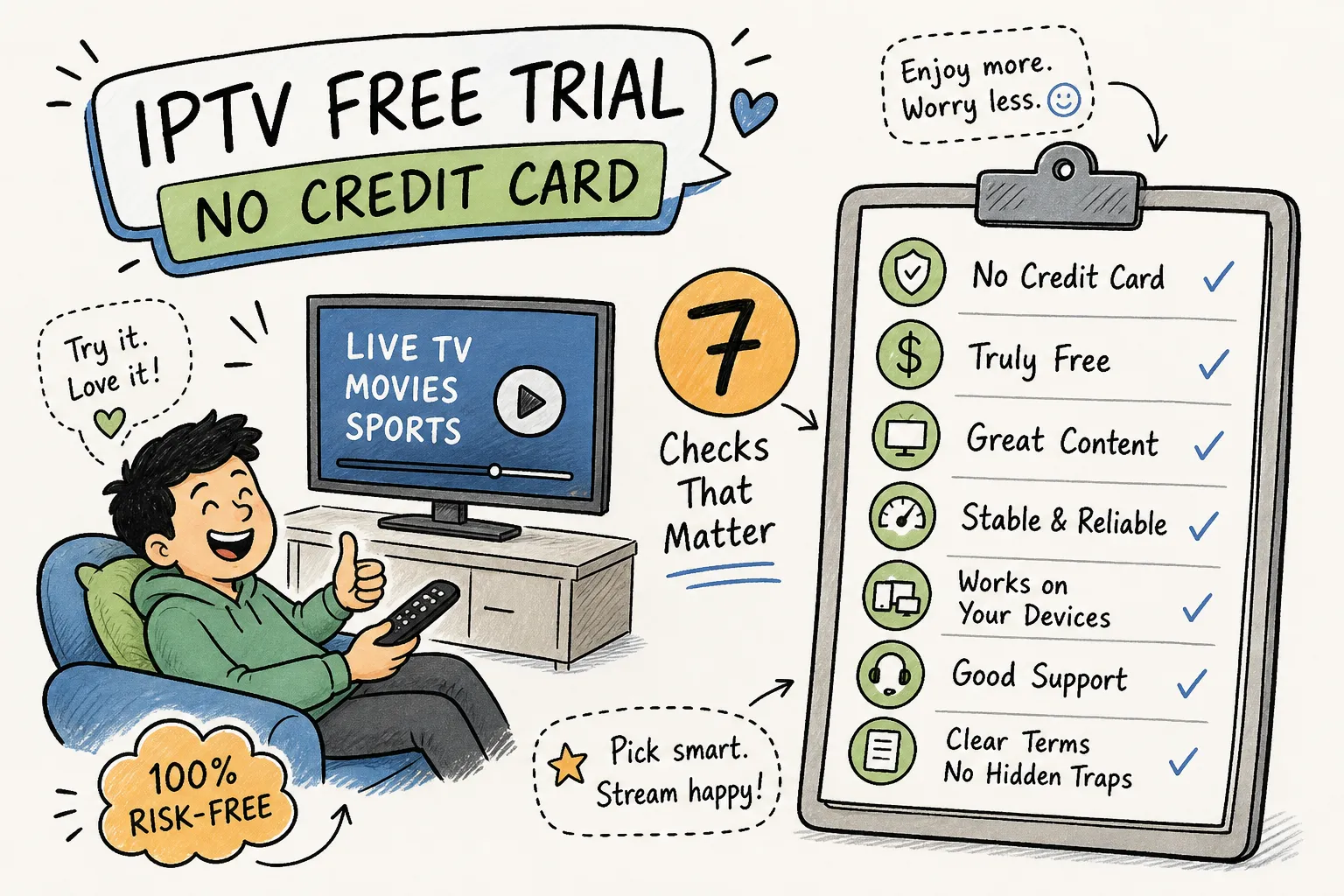
Many services calling themselves “free trials” want your card on file before you’ve watched a single minute. That’s not a trial. That’s a commitment dressed up as generosity. A genuine IPTV trial no credit card means exactly what it says: you test first, you decide later, and nothing gets charged unless you actively choose a plan.
The Australian IPTV market is flooded with providers making big promises. Some deliver. Many don’t. The difference between a legitimate no credit card IPTV trial and a data-harvesting exercise is entirely visible once you know what to look for. IPTV Australia 4K offers a free trial that requires no credit card details, alongside a 7-day money-back guarantee, because they’re confident in what they’re delivering: 65,000+ live channels, 4K streaming, and live Australian sports. The no-card approach isn’t a gimmick. Many reputable providers avoid requiring card details for initial trials, and the absence of card collection is a strong legitimacy indicator, it’s a baseline any serious service should meet.
These seven checks give you a structured way to evaluate any IPTV trial without a credit card commitment before you hand over a cent, or any payment detail.
1. Confirm no card is collected at sign-up
When a provider takes no payment details during sign-up, auto-billing becomes structurally impossible. There’s nothing stored to charge when the trial ends. Legitimate sign-up looks like this: a basic form, a username or email address, and then immediate access. No payment gateway, no “card for verification” language, no redirect to a checkout screen.
That “card for verification” phrase is one to watch. It’s the most common mechanism providers use to slide into auto-renewal. You provide details for what feels like identity confirmation, and the trial quietly converts to a subscription when the access window closes. If the sign-up form asks for any payment information at all, the trial isn’t free. It’s a delayed charge with a grace period attached.
2. How to find an IPTV trial no credit card, and spot fake ones
Fake IPTV trials follow a predictable pattern. They’re designed to collect your data or your money before you’ve evaluated anything. Spotting the pattern takes a minute or two at most.
On the payment side, watch for these warning signs:
- Requests for full card details at sign-up
- Crypto-only or gift card payment requirements
- Countdown timers manufacturing urgency
- Redirect-heavy sign-up pages that look cloned from legitimate sites
- Requests to install unverified APK files
Each of these signals a “trial” built to harvest rather than demonstrate. APK install requests in particular aren’t about giving you access, they’re about putting something on your device.
On the content side, be sceptical of impossible channel counts (“all channels worldwide”), promises of “100% uptime” and “never buffers,” and anonymous providers with no verifiable company information or terms of service. A real provider backs every claim with a transparent pricing page and identifiable support channels. If you can’t find either, move on.
3. Test streaming quality in the first hour
The first hour of any IPTV trial tells you most of what you need to know about quality. You don’t need special tools: a stopwatch, a few notes, and a short channel list will do it.
Measure startup speed first. Click a channel and time how long it takes to deliver a stable picture. Two to five seconds is solid performance. Ten seconds or more is a problem. Do this across ten channels and record the results. Averages matter more than individual results, since a single slow channel might be a source issue rather than a service-wide problem.
Then log buffering events. Watch each channel for fifteen to twenty minutes and record every freeze or loading spinner with a timestamp. Fast-motion content is the most useful test material here. Buffering on a static talking head is easy to hide. Buffering on a live AFL match or a cricket over at 150 km/h is not. Frequent buffering every five to ten minutes during a sustained session is a provider-side problem, not a network one. Repeat the same channels during evening peak hours, roughly 7, 10 PM, to see how the service holds up under load.
4. Check channels, devices and support responsiveness
Quality on one channel on one device means nothing if the service falls apart everywhere else. Build a sample list of ten channels across different categories: national free-to-air, sports, international content, and one 4K channel if the service claims 4K availability. Confirm each channel actually plays rather than just appearing in the programme guide as a dead listing. A channel in the EPG that returns a black screen or an error is a common indicator of inflated library claims.
Test on at least two devices simultaneously. Many providers throttle performance heavily when multiple connections are active, even on plans that technically allow it. If picture quality drops noticeably on the second device, that’s a real-world limitation you’d hit the moment another household member tries to watch something different.
Also send a technical question to support during the trial, at different times of day if possible. Note the response time, the quality of the answer, and the tone. A provider that ignores a query during the free trial period isn’t going to become more attentive once you’re a paying subscriber. How they treat you before any money changes hands is the preview of how they’ll treat you after.
5. Understand billing and the Australian legal picture
If no payment details were collected during the trial, the billing question answers itself: there’s nothing to charge. The trial expires and access stops. When you do move to a paid plan, look for “one-time payment” or “prepaid” language at the checkout screen. That confirms the subscription doesn’t roll over automatically. Contrast that with providers whose paid plans include auto-renewal clauses buried in terms of service, requiring active cancellation to avoid being charged for a new period.
On the legal side, the picture in Australia is worth understanding clearly. IPTV as a technology is lawful. The risk arises when a service streams copyrighted content without the rights holder’s permission. Enforcement in practice focuses on operators and resellers rather than individual viewers at home, but that doesn’t make unlicensed viewing risk-free.
Australian courts can issue site-blocking orders under the Copyright Act, which is why some services become inaccessible from Australia with no warning. Choosing a provider with transparent terms, verifiable company identity, and legitimate licensing significantly reduces both legal and security exposure. If a provider’s ownership is anonymous and its terms are non-existent, that’s not a detail to look past.
6. Check whether the provider’s billing terms are genuinely clear
This check sits alongside the others but deserves its own attention. A no-card IPTV trial means nothing if the paid subscription that follows it is designed to trap you. Look at the provider’s billing page before you sign up for anything. Are the plan lengths listed plainly? Are cancellation terms in plain English? Is there a clearly stated refund policy?
Providers who obscure billing details at the trial stage tend to obscure them further once you’re paying. Transparent billing, easy to find, easy to understand, is a separate signal to the no-card trial itself, and it’s worth treating as its own check.
7. Evaluate the provider against all the checks together
Running these checks individually is useful. Running them together tells you whether a provider is genuinely built for daily use or simply impressive on a demo reel.
A service that passes all seven checks is a service worth paying for. Those checks cover: no card at sign-up, a clean red-flag assessment, solid startup speed and buffering performance, real channel availability, multi-device stability, responsive support, and clear billing terms.
Most services that fail will fail early, usually at check one or check two. The rest of the list is there for borderline cases: providers who look legitimate on the surface but haven’t been stress-tested yet.
IPTV Australia 4K: built to pass every check
After running the checks above, the question becomes: which provider actually holds up? IPTV Australia 4K is built specifically for Australian viewers who want proper live sports, a large content library, and a no credit card IPTV trial that carries zero financial risk. The free trial requires no credit card details, no auto-renewal trap by design. The trial ends when it ends, and you decide what to do next.
If you move to a paid plan and aren’t satisfied, the 7-day money-back guarantee provides a second layer of protection. Subscription plans are flexible: month-to-month, 3-month, 6-month, and annual options starting from $15 AUD per month, with single and dual-device configurations available. There’s no long-term lock-in and no card kept on file from the trial period. (Confirm current pricing and plan details directly on the IPTV Australia 4K pricing page, as figures may be updated.)
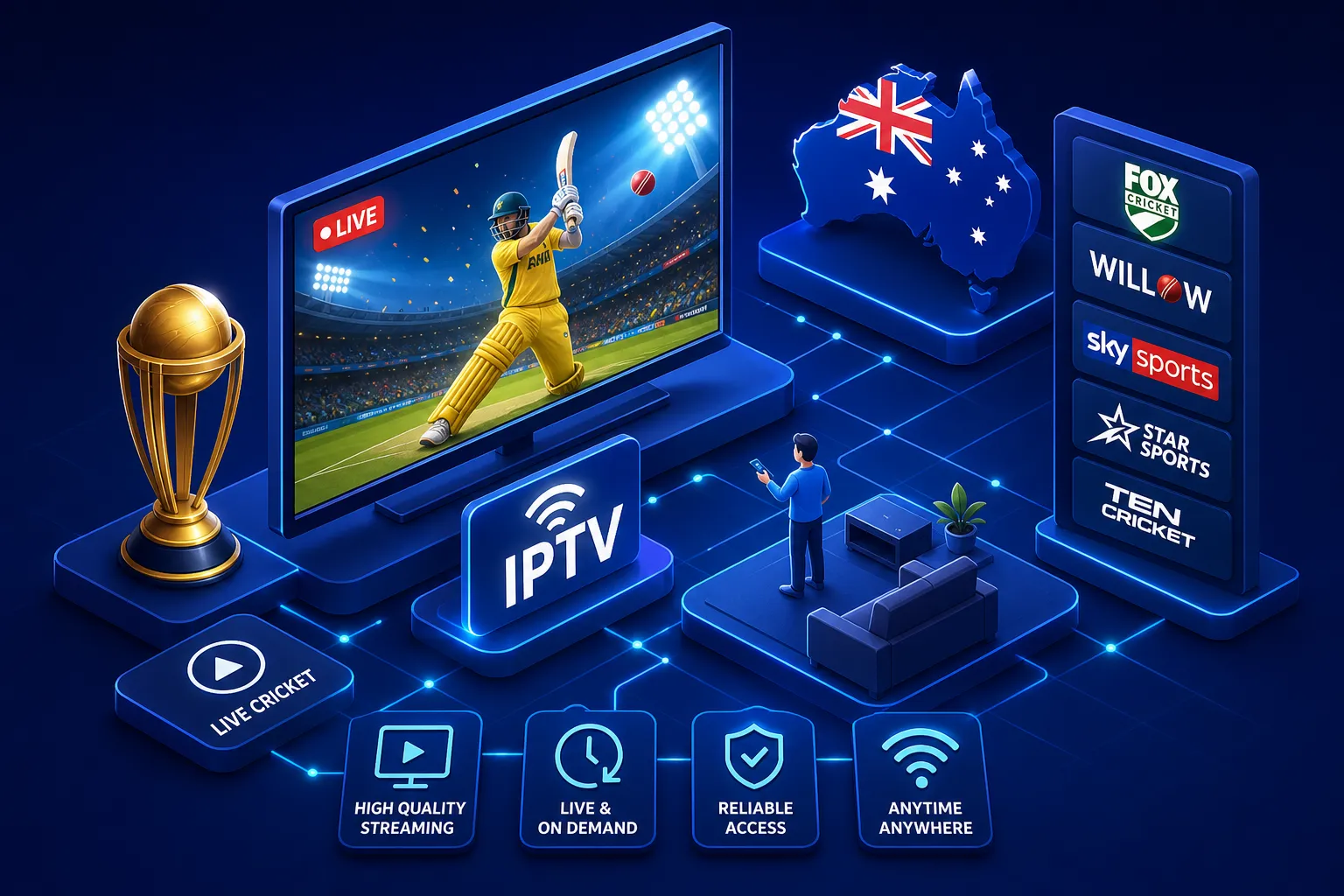
During the trial, run the full checklist. Test AFL and cricket channels during a live broadcast and time startup speed carefully. Confirm 4K channel availability. Pull up the VOD library, which includes 100,000+ titles alongside 65,000+ live channels (including 23,000+ dedicated sports channels), across two devices simultaneously and check whether performance degrades. Then send a message to the support team at different times of day. The trial gives Australian viewers more than enough access to make a properly informed decision before spending anything.
The standard is simple: IPTV free trial, no card required
A genuine IPTV free trial no credit card required isn’t a bonus feature. It’s the baseline standard. Any provider that makes you hand over card details before you’ve watched a single minute has already answered the most important question about how they operate.
The seven checks in this guide give you a structured way to evaluate any service: spot scam indicators early, test streaming performance properly, and understand the billing and legal picture before committing. Most of the work happens in the first hour. The rest confirms what that hour already showed you.
IPTV Australia 4K removes the financial barrier entirely with an IPTV trial no credit card required. Run the checks, test the service on your terms, and make an informed call. That’s how a legitimate trial is supposed to work.